
Bassini Repair
Bassini Repair
David Ray Velez, MD
Definition
Definition: An Open Tissue Repair that Reconstructs the Posterior Wall by Approximation of the Conjoined Tendon to the Inguinal Ligament
Introduced by Edoardo Bassini in the 1880’s it Dramatically Reduced Recurrence Compared to Prior Techniques and Historically Became the Foundation for Modern Inguinal Hernia Repair
See Also:
*See Inguinal Hernia
*See Inguinal Hernia Repair (IHR)
Technique
Skin Incision: 6-8 cm Oblique Incision Parallel and Just Superior to the Inguinal Ligament
Dissection
- Carry Incision Down Through the Subcutaneous Tissue and Scarpa’s Fascia
- Expose and Longitudinally Incise the External Oblique Aponeurosis to Enter the Inguinal Canal
- Preserve the Ilioinguinal Nerve
- Mobilize and Isolate the Spermatic Cord and Encircle it with a Penrose Drain
- Dissect the Hernia Sac from the Spermatic Cord and Reduce It
- Consider High Ligation and Resection of the Sac vs Reduction Alone
Repair
- Incise the Posterior Wall (Transversalis Fascia) from the Internal Ring to the Pubic Tubercle to Expose the Preperitoneal Space and Facilitate Reduction of the Hernia Sac
- *Many Modern Descriptions Omit This Step Although the Original Bassini Operation Included Opening of the Transversalis Fascia
- Approximate the Conjoined Tendon (Internal Oblique and Transversus Abdominis Aponeurosis) to the Inguinal Ligament
- Classically Uses Interrupted Nonabsorbable Sutures
- Begins Medially at the Pubic Tubercle and Proceeds Laterally
- Continue Until the Internal Ring is Recreated Around the Spermatic Cord without Constriction
May Create a “Relaxing Incision” of the Anterior Rectus Sheath if Under Perceived Tension
Closure
- Return the Spermatic Cord to the Inguinal Canal
- Close the External Oblique Aponeurosis Over the Spermatic Cord
- Preserve the Ilioinguinal Nerve
- Close Scarpa’s Fascia and Skin
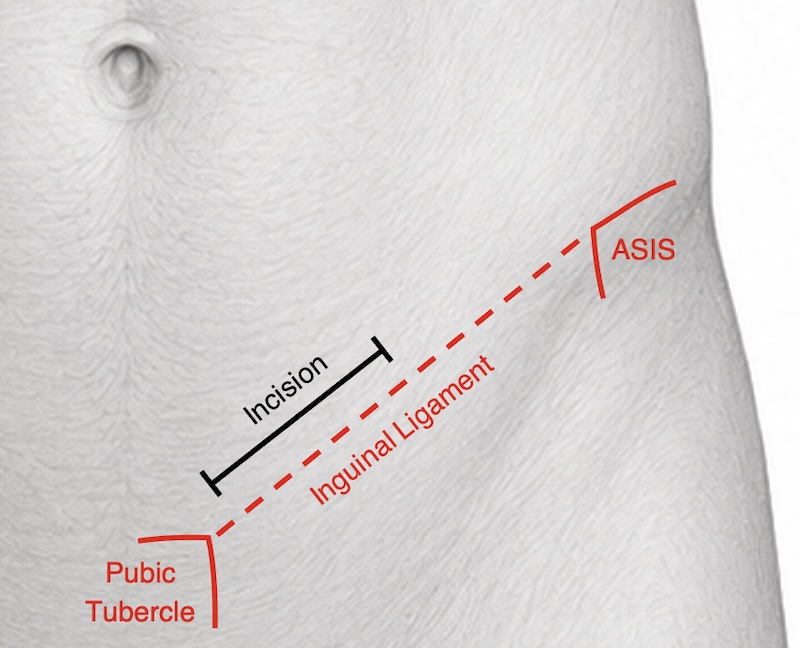
Incision
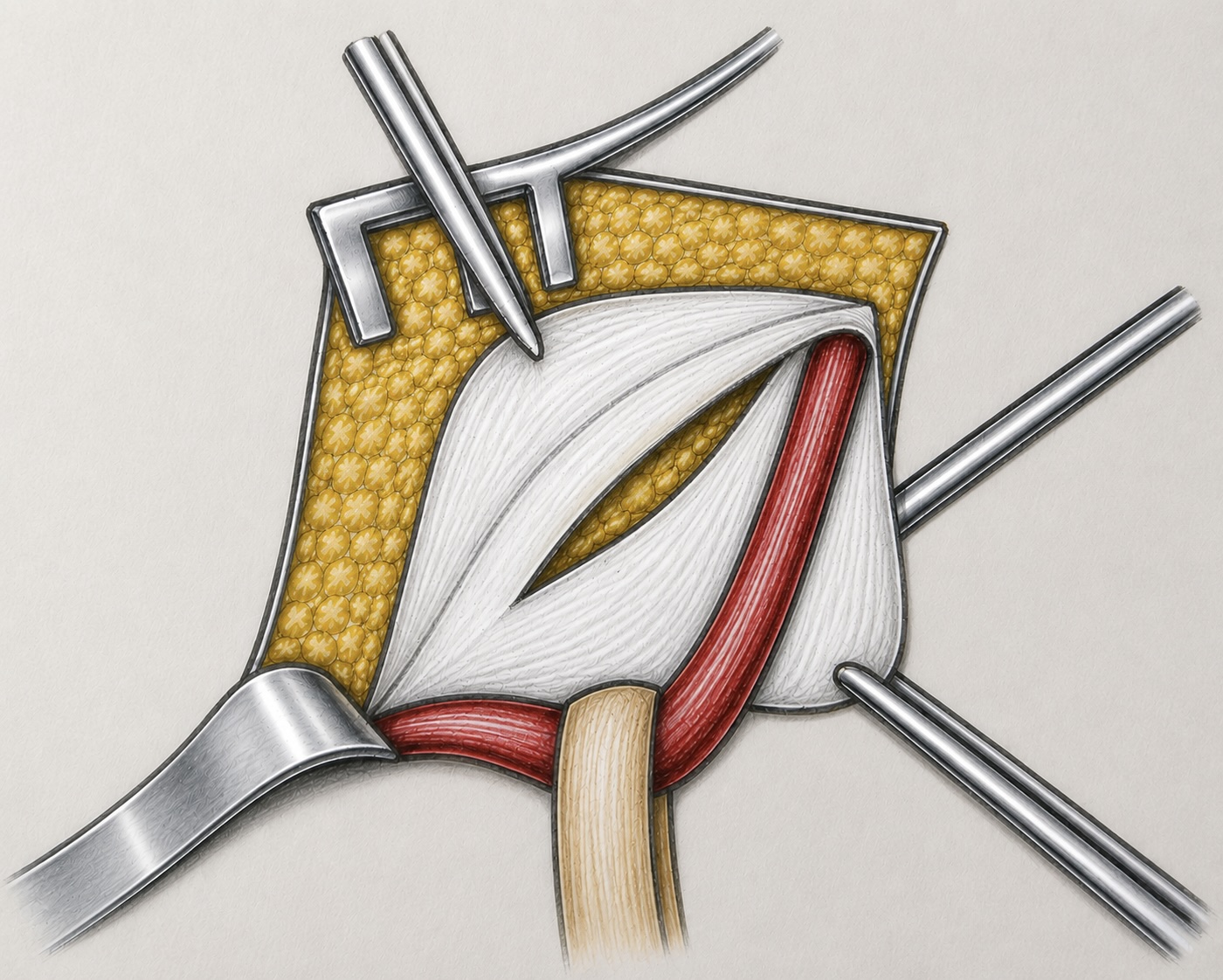
Incise the Posterior Wall
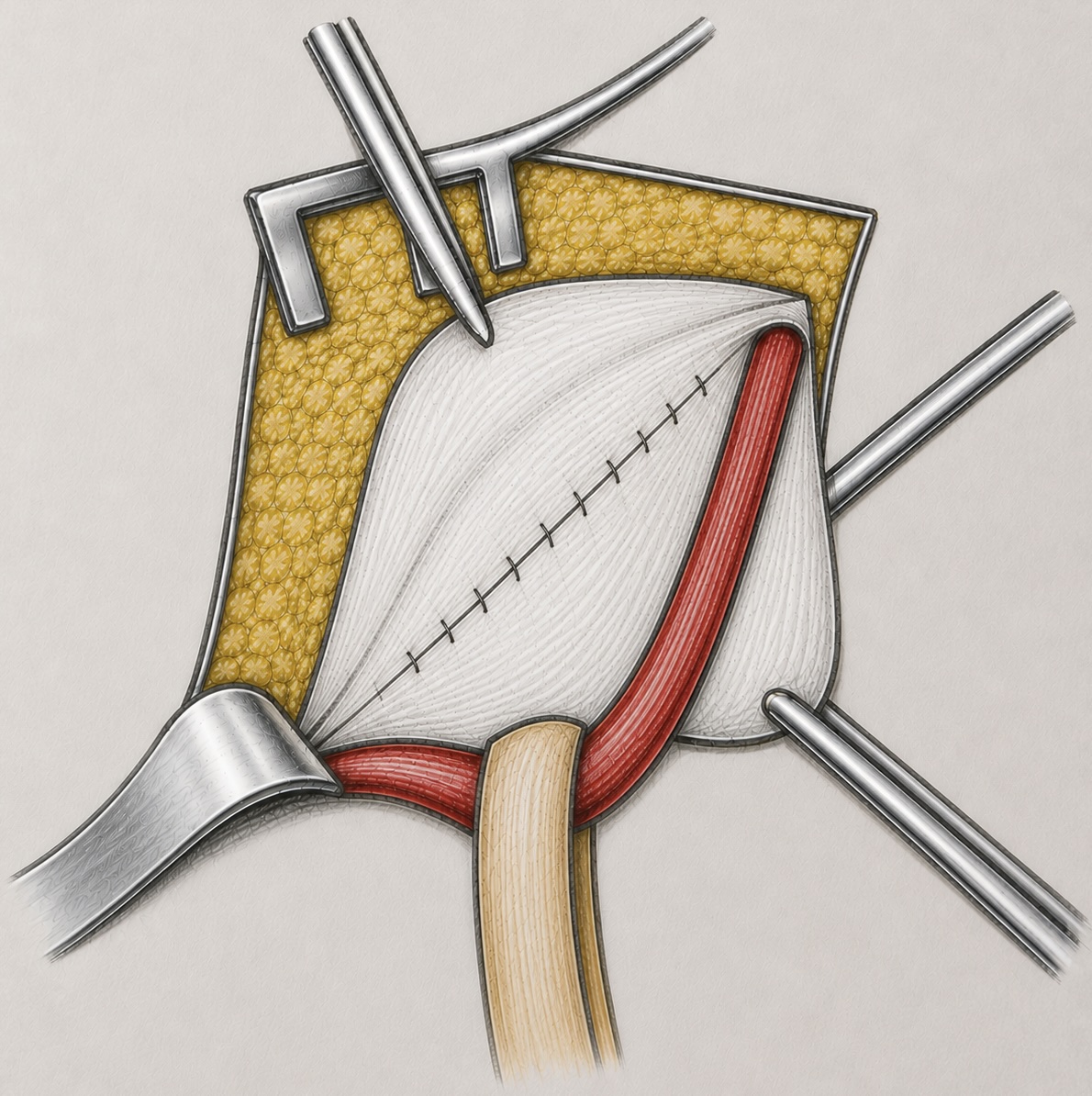
Repair: Conjoined Tendon to Inguinal Ligament