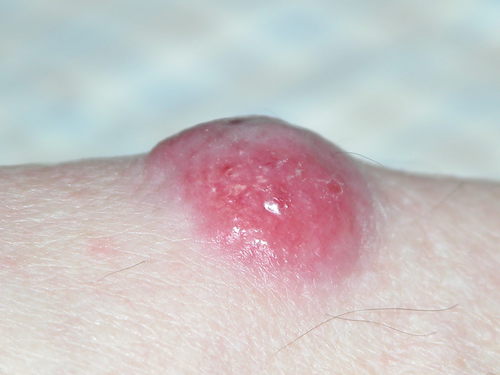
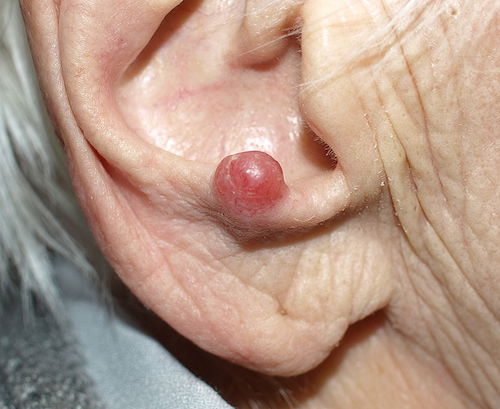
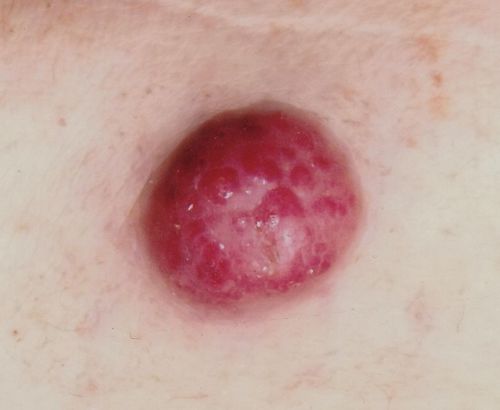
Merkel Cell Carcinoma (MCC) Merkel Cell Carcinoma (MCC) Keith Scheller, MD Table of Contents Background and PresentationDiagnosis and Treatment Background and Presentation A Rare, Very Aggressive Neuroendocrine Tumor with Early SpreadHigh Risk for Recurrence and MetastasisRisk FactorsElderly (90% are Over 50 Years Old)White Skin (95%)Male Sex (2.2x Higher Risk than Females)Immunosuppression (HIV, Multiple Myeloma, Chronic Lymphocytic Leukemia, etc.)Merkel Cell Polyomavirus (MCPyV)Sun/UV ExposurePresentationFirm, Red LesionNon-TenderThe Majority (88%) are Asymptomatic Merkel Cell Carcinoma 1 Merkel Cell Carcinoma 2 Diagnosis and Treatment DiagnosisRequires a High Index of SuspicionOften Misdiagnosed as a Benign Lesion Such as a Cyst or LipomaDefinitive Diagnosis Made by BiopsyEvaluate with PET and MRI/CT PreoperativelyHistologic StainingStain Positive:Cytokeratin 20 (CK20) – Characteristic Paranuclear Dot-Like or Diffuse Cytoplasmic Staining PatternVarious Neuroendocrine Markers (Chromogranin, Synaptophysin, CD56)Stain Negative:Thyroid Transcription Factor (TFF-1)S-100Leuko0cyte Common Antigen (LCA)BCORTreatmentPrimary Treatment: Wide Local Excision (WLE), Sentinel Lymph Node Biopsy (SLNB), and Radiation TherapyMargins: ≥ 1-2 cmPositive Lymph Node: Node Dissection and/or Radiation TherapyNodal or Distant Metastases: May Consider Systemic Chemotherapy, Radiation, or Surgical Resection if Resectable Merkel Cell Carcinoma 3 References Paoli J. Wikimedia Commons. (License: CC BY-SA-4.0)Peter KD. Wikimedia Commons. (License: CC BY-3.0)Doc 103. Wikimedia Commons. (License: CC BY-SA-3.0)