
Stomal Ischemia/Necrosis
Stomal Ischemia/Necrosis
David Ray Velez, MD
Table of Contents
Definitions
Stomal Ischemia/Necrosis: Inadequate Blood Supply (Ischemia) of the Stoma that Can Cause Tissue Death (Necrosis)
- Causes a Dusky/Dark Appearance
Incidence: 2-16%
Venous Congestion
- Stomas Can Frequently Appear “Dusky” Shortly After Surgery without Overt Arterial Compromise
- Swelling and Constriction Causes Venous Congestion
- Venous Congestion Causes Further Swelling and Cyanosis (Appearing Ischemic)
- Normal Color Returns Once Postoperative Edema Resolves and Venous Outflow Improves
- *Caution: Venous Congestion Can Progress with Worsening Swelling that Eventually Causes Ischemia with Impairment of Arterial Inflow
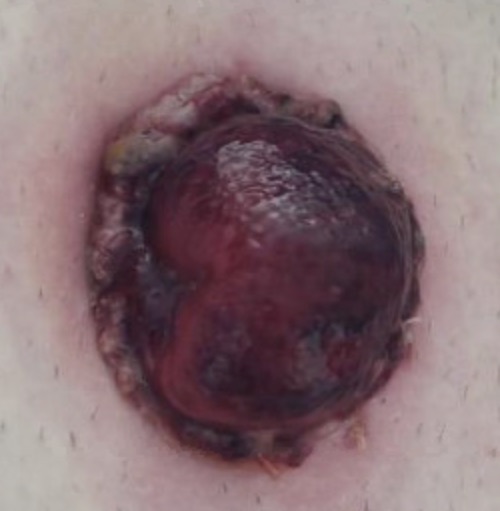
Stomal Ischemia
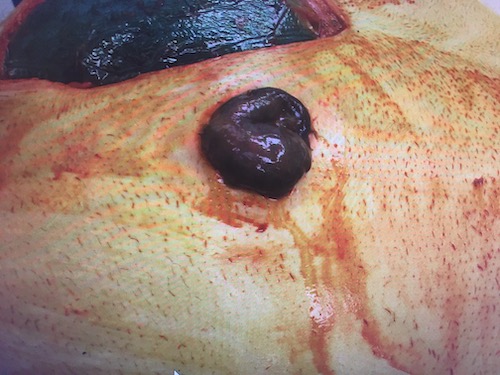
Stomal Necrosis
Risk Factors
Patient Factors
- Obesity
- IBD
- Vascular Disease
- Diabetes
Surgical Factors
- Tension
- Devascularization/Inadequate Blood Supply to the Conduit
- Inadequate Size of Fascial/Skin Opening
- Colostomy – Worse Blood Supply than the Small Bowel
- End Ostomy – Loop Ostomies Have a Dual Blood Supply from Both the Proximal and Distal Limbs
- Emergency Surgery
Management
The First Step Must Be to Evaluate the Extent of Necrosis (Determine if it Extends Above or Below the Level of the Fascia)
- Test-Tube Evaluation: A Lubricated Test Tube Inserted into the Stoma and a Flashlight is Directed Through to Evaluate the Surrounding Mucosa
- Endoscopic Evaluation: Anoscope or Flexible Sigmoidoscopy Inserted into the Stoma
Superficial (Distal) to Fascia: Observe and Monitor Progression
- Can Progress and Extend Past the Fascia Eventually Requiring Surgical Revision
- Can Cause Mucocutaneous Separation or Stomal Stenosis/Stricture as it Heals
Extends Beyond (Proximal to) Fascia: Immediate Surgical Revision
- Generally Requires Laparotomy with Ostomy Revision
- Risk for Necrosis with Potential Stool Spillage if Not Revised