
Esophageal Disorders of Peristalsis
Esophageal Disorders of Peristalsis
Yaiel G. Rodríguez-Avilés, MD
Table of Contents
Definition
Definition: A Group of Esophageal Motility Disorders Characterized by Abnormal Esophageal Body Contractions in the Setting of Normal Esophagogastric Junction (EGJ) Relaxation
Disorders are Classified into Two Subcategories
- Hypomotility Disorders (Reduced Contractile Vigor)
- Absent Contractility
- Ineffective Esophageal Motility (IEM)
- Spastic and Hypercontractile Disorders
- Distal Esophageal Spasm (DES)
- Hypercontractile Esophagus
Epidemiology
- General Prevalence is Poorly Defined – Estimates Vary by Referral Population and Diagnostic Criteria
- Ineffective Esophageal Motility is Encountered More Frequently than Spastic Disorders
Pathogenesis and Causes
Pathogenesis
- Normal Esophageal Peristalsis Depends on Coordinated Inhibitory and Excitatory Neural Signaling Within the Myenteric Plexus
- Inhibitory (Nitrergic) Signaling Produces Smooth Muscle Relaxation
- Excitatory (Cholinergic) Signaling Promotes Contraction
- The Relative Balance and Timing of These Pathways Determine the Propagation and Coordination of the Peristaltic Contraction
- Disruption of This Neural Coordination May Result in Weak, Failed, Premature, or Excessively Vigorous Esophageal Contractions
Causes
- Primary: Idiopathic
- Secondary Causes/Associations:
- Gastroesophageal Reflux Disease (GERD)
- Connective Tissue Diseases
- Chronic Opioid Exposure – Especially Spastic Patterns
- Eosinophilic Esophagitis
- Other Esophageal Inflammation
- Neurologic Disorders
- Diabetes Mellitus
- Prior Esophageal Surgery or Intervention
Specific Associations
- Absent Contractility:
- Often Associated with Connective Tissue Diseases
- Systemic Sclerosis (Scleroderma) is the Classic and Most Strongly Associated Condition – Smooth Muscle Atrophy and Fibrosis Cause Markedly Reduced or Absent Peristalsis
- Ineffective Esophageal Motility (IEM):
- Impaired Neural and/or Smooth Muscle
- Anticholinergic Medications
- Often Associated with Severe GERD
- Distal Esophageal Spasm (DES):
- Reduced Nitrergic (Nitric Oxide-Mediated) Inhibition Causing Premature Distal Esophageal Contractions
- Increased Thickness of the Esophageal Smooth Muscle
- Hypercontractile Esophagus:
- Excessive Cholinergic Stimulation
- Failure of Inhibition
- Uncoordinated Contractions of the Circular and Smooth Muscles
- Opioid Use Has Also Been Implicated
Clinical Presentation
Clinical Presentation
- Dysphagia – Most Common Symptom
- Non-Cardiac Chest Pain
- Heartburn
- Regurgitation
Additional Findings
- Nocturnal Cough
- Aspiration and Recurrent Pneumonia
- Hiccups
- Globus Sensation
Hypomotility Disorders May Be Asymptomatic or Present Predominantly with Reflux Symptoms
Spastic Disorders More Commonly Present with Intermittent Dysphagia and Episodic Non-Cardiac Chest Pain
Diagnosis
Diagnosis
- High-Resolution Manometry (HRM) is the Diagnostic Gold Standard Test
- Esophagogastroduodenoscopy (EGD) Should Be Performed in all Patients with Suspected Esophageal Dysmotility to Exclude Mechanical Obstruction or Malignancy
- Timed Barium Esophagram (TBE) is Complementary but Not Diagnostic of Specific Motility Disorders Itself
Upper Endoscopy/Esophagogastroduodenoscopy (EGD)
- Often First Diagnostic Test Performed
- Must Exclude Secondary Mechanical Cause
- Erosive Esophagitis May Coexist with Disorders of Peristalsis Due to Impaired Esophageal Clearance Causing Prolonged Exposure to Refluxate
High-Resolution Manometry (HRM)
- The Gold Standard Diagnostic Test
- Normal Median Integrated Relaxation Pressure (IRP)
- Abnormal Motor Pattern:
- Distal Latency (DL): Contraction Timing
- Distal Contractile Integral (DCI): Contraction Vigor
- Contractile Pattern: Determines Whether Peristalsis is Intact, Ineffective, Failed, or Hypercontractile
- *See Classification Below for Specific Findings
Timed Barium Esophagram (TBE)
- Provides Objective Assessment of Impaired Esophageal Emptying Across the EGJ
- Rule Out Hernias, Diverticula, and Quantify Emptying
Reflux (pH) Monitoring
- Selected Patients with Suspected Reflux-Related Symptoms
- Particularly Useful When Reflux Symptoms Persist Despite Treatment or When the Diagnosis of GERD Is Uncertain
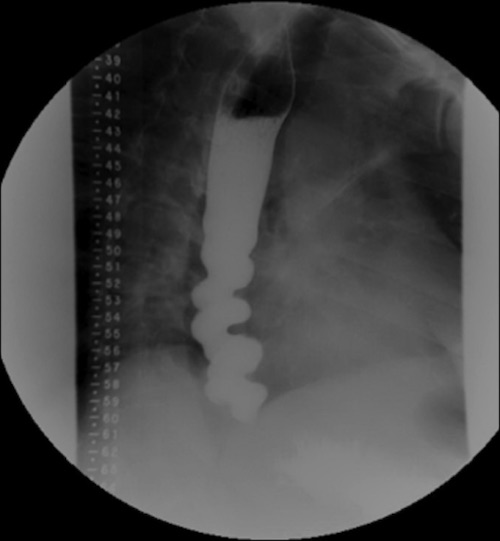
Esophagram Depicting a “Corkscrew” (Rosary-Bead) Appearance Classically Seen in DES 1
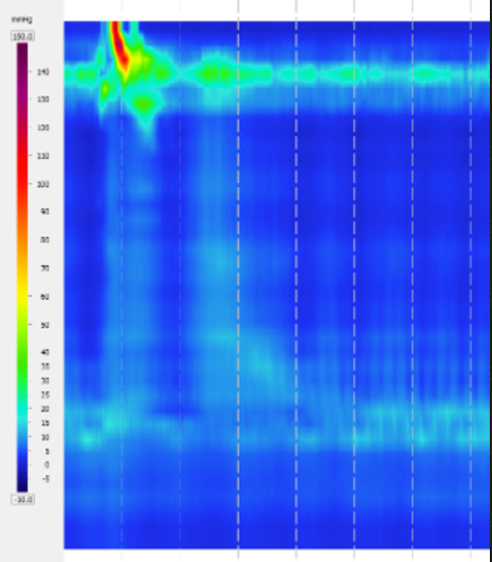
Absent Contractility: Complete Absence of Esophageal Contractions
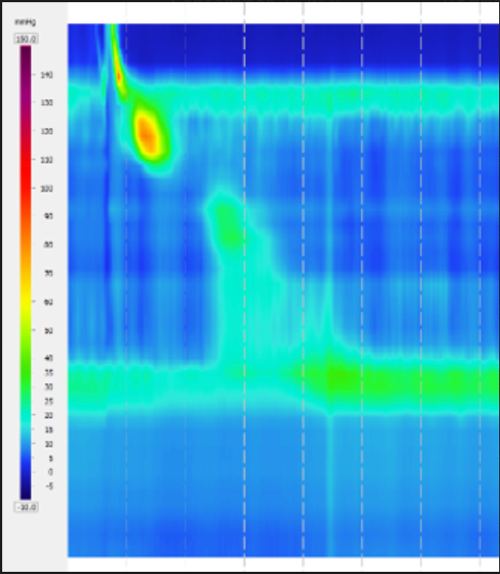
Ineffective Esophageal Motility (IEM): Frequent Ineffective or Failed Contractions
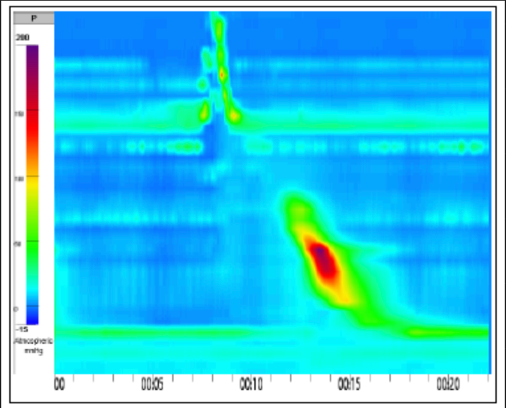
Distal Esophageal Spasm (DES): Premature Distal Esophageal Contractions with Normal LES Relaxation
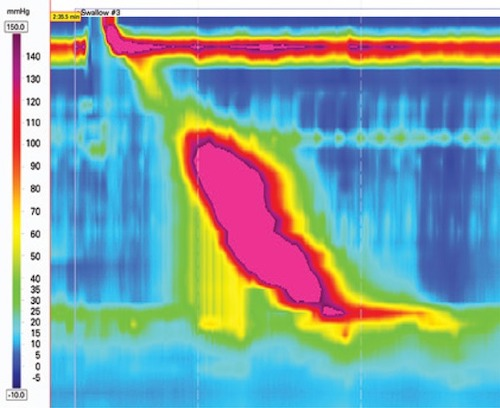
Hypercontractile Esophagus: Excessively Vigorous Esophageal Contractions with DCI > 8000
Classification/Types
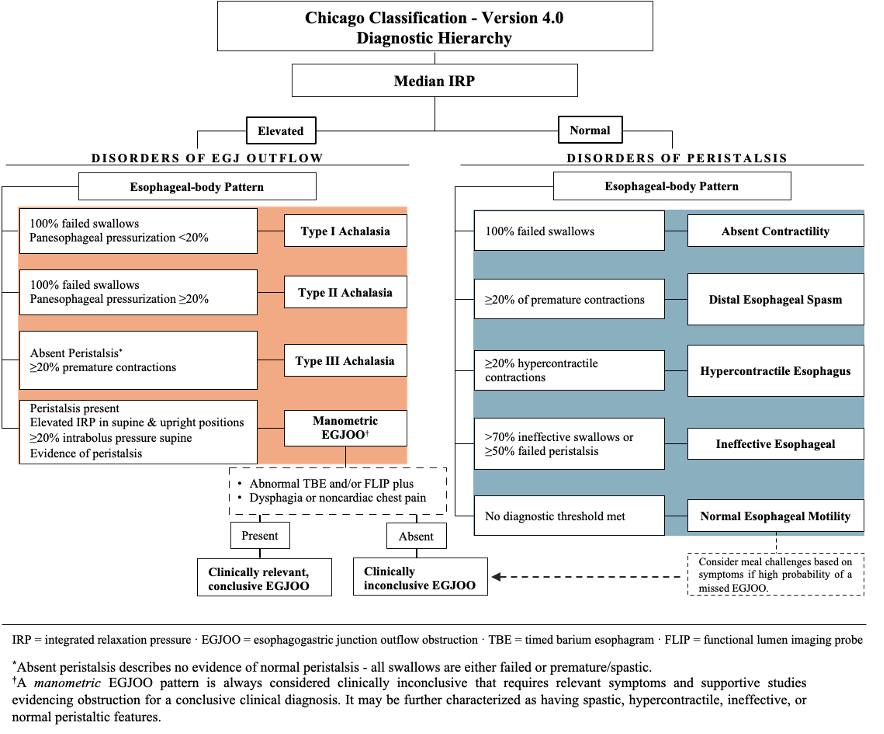
Based Upon the Chicago Classification – Version 4.0 (CCv4)
Absent Contractility
- Definition: Complete Absence of Normal Esophageal Body Contraction Despite Preserved EGJ Relaxation
- Manometry:
- Normal Median Integrated Relaxation Pressure (IRP)
- 100% Failed Peristalsis (DCI < 100 mmHg·s·cm)
Ineffective Esophageal Motility (IEM)
- Definition: Impaired Esophageal Peristalsis Characterized by Weak or Failed Contractions Resulting in Ineffective Bolus Clearance
- Manometry:
- Normal Median Integrated Relaxation Pressure (IRP)
- Either > 70% Ineffective Swallows or ≥ 50% Failed Swallows
Distal Esophageal Spasm (DES)
- Definition: Premature Esophageal Contraction Timing Despite Preserved EGJ Relaxation
- Manometry:
- Normal Median Integrated Relaxation Pressure (IRP)
- ≥ 20% Premature/Spastic Contractions (DL < 4.5 Seconds) with Normal Vigor (DCI ≥ 450 mmHg·s·cm)
- A Diagnosis of “Clinically Relevant” DES Requires BOTH:
- Conclusive Manometry Findings AND
- Clinically Relevant Symptoms (Dysphagia or Non-Cardiac Chest Pain)
Hypercontractile Esophagus
- Previously Called “Nutcracker Esophagus” or “Jackhammer Esophagus”
- Definition: Excessively Vigorous Esophageal Contractions Despite Normal Coordination
- Manometry:
- Normal Median Integrated Relaxation Pressure (IRP)
- ≥ 20% Swallows with DCI > 8,000
- Subtypes:
- Single Peak Hypercontractile Swallow – Isolated Excessively Vigorous Contractions
- Hypercontractile with Jackhammer Esophagus – Repetitive, Prolonged Hypercontractile Contractions
- Hypercontractile with LES After-Contraction – Hypercontractile Swallow Accompanied by Excessively Vigorous LES After-Contractions
- A Diagnosis of “Clinically Relevant” Hypercontractile Esophagus Requires BOTH:
- Conclusive Manometry Findings AND
- Clinically Relevant Symptoms (Dysphagia or Non-Cardiac Chest Pain)
Note: EGJOO and Spastic Disorders (DES/Hypercontractile Esophagus) Require Specific Symptoms to Be Considered “Clinically Relevant” While Achalasia and Hypomotility Disorders (Absent Contractility/Ineffective Esophageal Motility) Do Not
Treatment
General Management
- Dietary and Lifestyle Modification:
- Small, Frequent Meals
- Eat Slowly and Chew Thoroughly
- Maintain Adequate Hydration During Meals to Facilitate Esophageal Clearance
- Identify and Avoid Foods or Beverages that Trigger Symptoms
- Treat Overlapping GERD/Esophagitis: Proton Pump Inhibitor (PPI)
Reduced Contractile Vigor (IEM/Absent Contractility)
- Primarily Managed by Dietary and Lifestyle Modification with Optimal Management for Overlapping GERD/Esophagitis
- Pharmacologic Agents:
- No Pharmacologic Agent Reliably Restores Contractility
- IEM: May Consider Prokinetic Agents (Buspirone, Prucalopride, Pyridostigmine, etc) but Evidence of Meaningful Symptomatic Benefit is Limited
- Absent Contractility: No Established Pharmacologic Therapy
- Endoscopic Therapy:
- No Established Endoscopic or Surgical Therapy Restores Esophageal Contractility
- POEM and Heller Myotomy are Not Indicated
Spastic Disorders (DES/Hypercontractile Esophagus)
- Pharmacologic Agents: Smooth Muscle Relaxants or Neuromodulators
- Calcium Channel Blockers
- Nitrates
- Low-Dose Tricyclics
- Endoscopic Therapy:
- Botulinum Toxin Injection – May Provide Temporary Symptomatic Relief but Limited Durability
- Pneumatic Dilation – May Be Considered in Selected Patients but Less Well Established than for Achalasia
- Peroral Endoscopic Myotomy (POEM):
- Reserved for Severe, Persistent, and Refractory Cases
- Allows a Longer and More Tailored Myotomy of the Spastic Segment than a Surgical Heller Myotomy
- Heller Myotomy (HM):
- May Be Considered in Selected Refractory Patients
- Largely Fallen Out of Favor and POEM is Generally Preferred for Spastic Motility Disorders
References
- Samo S, Carlson DA, Kahrilas PJ, Pandolfino JE. Ineffective Esophageal Motility Progressing into Distal Esophageal Spasm and Then Type III Achalasia. ACG Case Rep J. 2016 Dec 21;3(4):e183. (License: CC BY-NC-ND-4.0)